


Sooner or later, a client is going to ask you for AI SEO services, usually with some version of: “Can you get us showing up in ChatGPT?”
I hear this one from agency owners in our community all the time.
Often, one of their client’s customers found a competitor by asking ChatGPT who to call, and now the client wants to know why it wasn’t them.
That can be an awkward moment, but here’s the good news.
That question is your opening to offer AI SEO services, and the easiest way in is one paid deliverable: an AI visibility audit.
Let me walk you through what goes in it and how to price it and the work that comes after.
What AI SEO services actually are
AI SEO services help a business get named and recommended when people ask ChatGPT, Gemini, Perplexity, or Google’s AI Overviews for answers.
You might also hear it called GEO (our go-to term here on the blog), AEO, or whatever name the community eventually lands on 😅.
Your clients won’t care either way. They care whether their name comes up.
If you’ve been doing SEO for a while, most of this will feel familiar:
- Crawlable pages
- Clear, direct answers to the questions customers ask
- Schema that spells out who the business is and what it offers
- Reviews and mentions across the web
What changes is the scorecard. Now you’re checking whether AI names your client, cites their site, and gets the facts about them right.
And that matters, because unfortunately fewer people are clicking through. In a March 2025 study, Pew Research Center found people clicked a regular Google result in 8% of visits when an AI summary appeared, compared with 15% when there wasn’t one.
Why the AI visibility audit is the best way in

You could just add a “GEO” line to the retainer you already have.
But put yourself in your client’s shoes for a second. All they see is a bigger invoice for the same work.
An audit is different. It’s a fixed-price, one-time deliverable that shows the client where they stand before you ask them for anything bigger.
- It makes the problem visible. Your client can’t see what ChatGPT tells their customers.
- It’s an easy yes. A small, clear scope feels low-risk, especially when “AI SEO” still sounds new to them.
- It writes your next proposal. Every gap you find becomes a line item.
I’ve shipped more than 600 client projects, and one thing has held true the whole way: clients say yes to what they can see.
Most of them have no idea what AI is saying about their business, and that’s not their fault. They’re busy running it. It’s our job to show them.
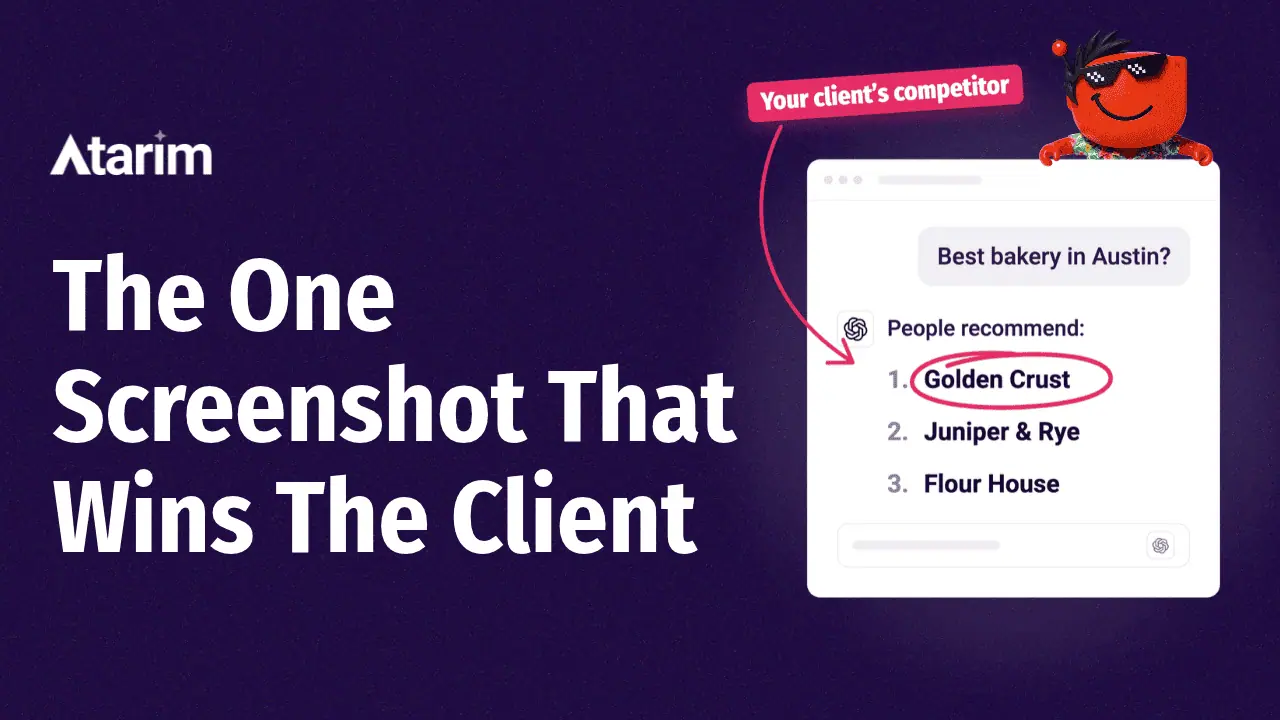
A screenshot of a competitor’s name sitting where theirs should be does that better than any pitch deck I’ve ever made.
What goes in an AI visibility audit

A good AI visibility audit answers three questions your client actually cares about:
- Do AI tools mention the client?
- Is what they say accurate?
- What’s holding them back?
Here are the six parts I’d include.
1. The prompt test
This is the heart of it. Write 15 to 25 questions a real customer would ask, like “best [service] in [city],” “who should I hire to [fix problem],” and “[client] vs [competitor].”
Run each one in ChatGPT, Gemini, Perplexity, and Google AI Overviews from a logged-out or temporary chat, so your own history doesn’t skew the answers. Answers also change by location, so keep the city in the question.
Log who gets named and which sites get cited, and screenshot everything. We’re going to need it later for our report.
2. The accuracy check
Ask each tool about the business directly: what it does, its hours, its prices.
Wrong hours or an old address can turn up here. Those are easy wins to show a client.
3. The source map
Note which sites the AI keeps citing, such as review platforms, directories, Reddit, and industry roundups.
Then check whether your client appears on them. This often explains why a competitor gets named instead.
4. Site readiness
- Crawler access: robots.txt and CDN settings aren’t blocking OAI-SearchBot or PerplexityBot
- Schema: LocalBusiness, Organization, or FAQ markup, filled in correctly
- Answer-ready pages: key questions answered plainly near the top
- Consistent details: the same name, address, and phone number everywhere
5. The traffic baseline
In GA4, check referrals from chatgpt.com, perplexity.ai, and gemini.google.com. Some AI visits lose their referrer and show up as Direct, so treat this number as a floor.
Don’t worry if the numbers are small today. That’s your baseline, and it’s what makes next month’s report mean something.
So what’s normal? Less than most clients expect. Here’s where the latest benchmarks sit:
| What | Typical number | Source |
|---|---|---|
| AI referrals as a share of all site visits | About 0.2% | Contentsquare, 99 billion sessions |
| AI referrals for service businesses | About 0.5% | Contentsquare |
| AI referrals for large enterprise brands | About 1% (2.8% in tech) | Conductor, 1,215 enterprise sites |
| Google searches that show an AI Overview | About 1 in 4 (in Conductor’s sample) | Conductor, 21.9 million searches |
First, under 1% is completely normal, so the number to watch is the trend, plus whether they’re getting named in the prompt test.
Second, GA4 counts clicks from AI Overviews and AI Mode as regular Google organic traffic, so you can’t see that slice in analytics at all. That’s exactly why the screenshots matter in the report.
6. The fix list
List fixes in plain language, with the effort and impact of each.
Lead with the top three. Nobody acts on a 40-item spreadsheet. I know I wouldn’t.
Presenting it
Book 20 minutes and open with your most striking screenshot. Something like:
“I asked ChatGPT for the best [service] in [city], and three businesses came up. Yours wasn’t one of them yet, but I think I know why, and there’s one fix I’d start with.”
Then be honest with them.
AI answers shift from day to day, and nobody controls what they say, including you.
So don’t promise a client they’ll get cited. Nobody in this business can promise that.
What you can promise is that you’ll keep working to get them there, and show them exactly where things stand every month.
In my experience, clients trust you more when you’re the one telling them what can’t be promised. Close with one clear next step: a priced proposal for the fix sprint.
Which tools to use

You don’t need a big tool budget to get started. Free tools and a spreadsheet will carry your first few audits.
| Job | Tools | Cost |
|---|---|---|
| Prompt testing | ChatGPT, Gemini, Perplexity, Google Search (AI Overviews) | Free |
| Tracking over time | Ahrefs Brand Radar, Semrush | Paid |
| Traffic baseline | GA4, Google Search Console | Free |
| Schema and speed | Rich Results Test, PageSpeed Insights | Free |
| All of the above, every month, for every client | Atarim (that’s us, more on this at the end) | $67/mo; paste a URL to try it first |
How to package AI SEO services

The audit is step one. Once it has shown the client the gap, the ongoing work follows: a monthly add-on to the plan they already pay for, or a full retainer for bigger clients.
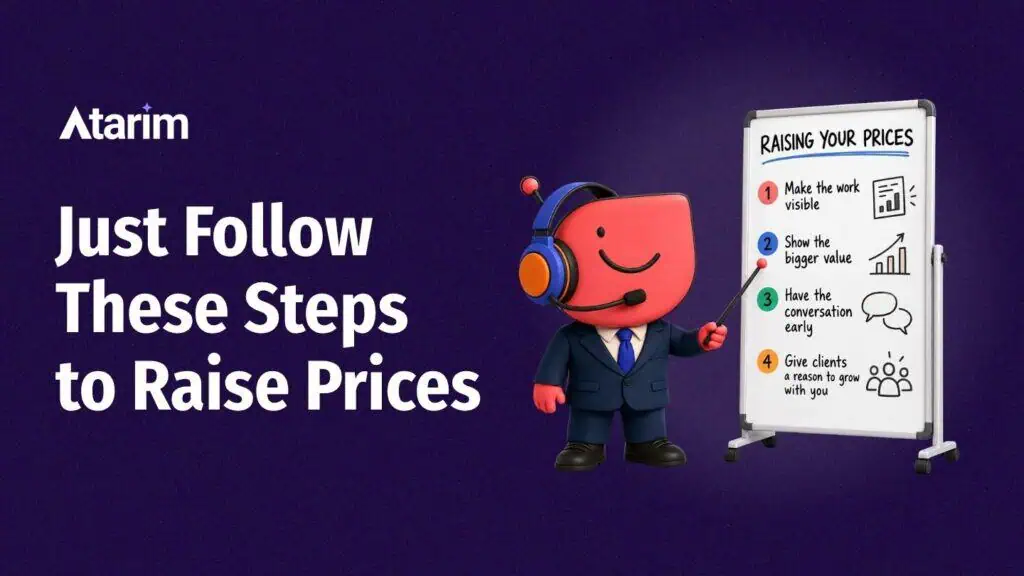
Price the outcome, never the hours. If AI tools make the audit faster, that’s margin you keep, so please don’t hand it back as a discount. For how to package, deliver and report on that ongoing work, see how to sell GEO services to clients.
Run your first AI visibility audit this week
The hard part is running it for every client, every month, without it eating your week.
That’s where Atarim comes in, the AI web agency, plugged into yours.
- Index, our SEO specialist, researches who ChatGPT cites and how often a client gets mentioned in ChatGPT and Google’s AI answers. It also covers keyword research and live Lighthouse audits.
- Lexi rewrites key pages into clear, answer-ready copy.
- Workflows can be built from a plain-English prompt, so the checks rerun every month without you.
Try this prompt inside of Atarim:
“Using live [country] search data, check whether [site URL] is cited in Google AI Overviews and whether it’s mentioned by ChatGPT for [industry] searches, reporting each separately. Then show how its organic keyword rankings for those searches have moved month by month over the last 12 months. If the site isn’t cited, or if the data source has no coverage for this market, say so plainly rather than estimating, and make clear which of those it is. Create an HTML artifact I can send to the client.”
Everything goes out under your agency’s name, and nothing ships without your yes.
Paste in your URL to start your AI visibility audit, with no account or card needed. $67 a month switches the team on.
And if it turns up something surprising, I’d love to hear about it.